The Score We Never Assigned
Part Two:
Seeing Every Child Whole — Building the Instruments Our Students Deserve
“We are all more capable than we think we are.” Liz Murray,
who went from homeless in the Bronx to Harvard, and whose story is its own argument for everything that follows.
Rui Dionisio, Ed.D.
In Part One, I shared a finding from my randomized control study — doctoral research that has taken me nearly twenty years to fully understand.
My study of 229 middle school students found that inquiry-based instruction significantly improved classroom performance on unit assessments — particularly for male students, and most dramatically for students with disabilities, who more than doubled their gains. But it produced no significant change in academic self-concept. And on the state standardized science test, there was no significant difference between groups at all.
The intervention moved performance.
It did not move the deeper belief.
I argued that this is not a flaw in the study. It is a diagnostic insight. Academic self-concept is not something good instruction produces. It is a pre-existing condition — a lens already in place before the teacher says a single word.
Which means we have been measuring it at the wrong end of the process entirely.
The question that follows is both obvious and urgent: if academic self-concept is a signal we need to read before instruction begins, what other signals are we failing to read? And what would it mean to build a school that was genuinely designed to find them?
The Instruments We Have. The Instruments We Need.
Angela Duckworth left her job as a seventh-grade math teacher in New York City to become a research psychologist because she could not stop thinking about something she had observed in her own classroom.
The students who tried hardest were not always the smartest.
She spent the next two decades studying what she came to call grit — perseverance and passion for long-term goals. And what she found, consistently, was this:
Grit and SAT scores are negatively correlated.
The students most likely to be filtered out by our academic threshold instruments may be precisely the students with the greatest capacity for sustained effort.
We are, in some cases, selecting against the very quality we most need.

Carol Dweck at Stanford discovered that students fall into two categories. Those who believe intelligence is fixed. And those who believe intelligence can grow.
The difference between them is not ability. It is how they respond to difficulty.
A fixed-mindset student encounters a hard problem and concludes, “I am not capable.”
A growth-mindset student encounters the same problem and concludes, “I need to work harder.”
Same student. Same problem. Completely different future.
Dweck’s Mindset Scale takes 12 minutes to administer. It is validated. It is free. And it predicts how a student will respond to the first hard thing they encounter in a rigorous course — before they have.
We could identify those students in advance. We just have to decide to look.
Joseph Renzulli at the University of Connecticut spent his entire career asking one question: what makes giftedness?
His answer was radical in 1978 and remains radical today.
Giftedness is not a fixed attribute. It is not what you score on a test. It is the intersection of above-average ability, task commitment, and creativity. And the instrument he built to identify it, the Interest-A-Lyzer, does not ask what students know.
It asks what they love.
What do you lose track of time doing? What problem would you work on if no one were grading you?
What makes you forget to eat lunch?
Where students love is where students will commit. And where they commit is where they will surprise you.

And then there is the research on flow — the state of complete absorption in a challenge that perfectly matches your skill. When a student loses track of time in a learning activity, they are not wasting time. They are showing you where their potential lies.
Self-Determination Theory tells us that three psychological needs — autonomy, competence, and relatedness — predict engagement more reliably than any achievement score. A student whose autonomy is chronically frustrated will appear disengaged on every measure we have, not because the potential is absent, but because the environment is suppressing it.
The most consequential indicators of a student’s potential are not always the most visible ones. They are the ones we have not yet built the instruments to find.
A Student Potential Profile: The Proposal
What I am proposing is not a new test.
We do not need more testing. We need different seeing.
I am proposing a Student Potential Profile—a set of six brief, validated instruments administered twice during a student’s school career: once in seventh grade and once in ninth grade. Not to sort students. To surface them. To make visible what the transcript cannot capture.
The six instruments together take approximately sixty minutes. No single one takes longer than fifteen. They measure grit, mindset, intrinsic interest, psychological need satisfaction, epistemic curiosity, and academic self-concept. Each one tells us something the PSAT cannot. Together, they tell us something no single instrument ever could.
The power is not in any individual score. It is in the pattern.
A student with high grit, high curiosity, and low academic self-concept is not a low-potential student.
She is a student who has been taught not to trust her own mind.
The response she needs is not remediation.
It is an invitation.

A specific invitation. Evidence-based. Delivered by a real person who has read the profile, seen the data, and decided to make the call. Accompanied by a single explicit message: we see you. We believe you belong here.
What schools could be — what they must become — are institutions that find the potential in every child before the child stops believing in it themselves.
The Moral Stake
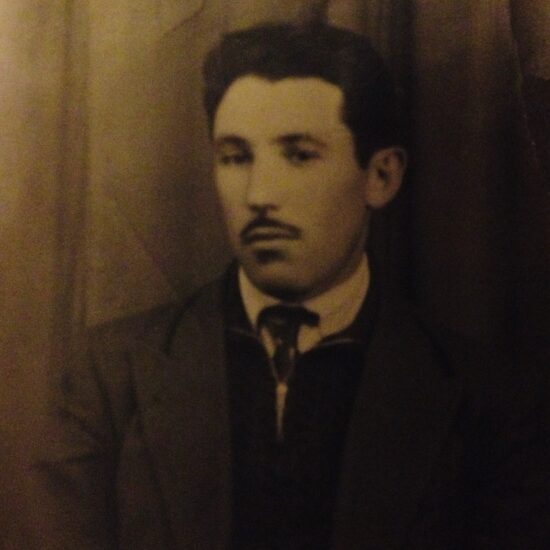
I am a first-generation Portuguese American. My parents worked in manufacturing. I was an ESL student. The school system I entered did not have the instruments to find me.
It found me anyway, through a teacher here, an administrator there, a coach who treated effort as evidence of character.
I was lucky.
I am under no illusion about that.
The children in our schools today cannot afford to depend on luck. They deserve people who believe in them. They also deserve systems. They deserve instruments as complex as they are. They deserve a school culture built on the conviction that potential is not a fixed quantity distributed unequally at birth, but a dynamic, developable capacity waiting to be discovered.
The instruments exist. The research is rich. What has been missing is the institutional will to build something worthy of what we know.
My clinical observation has been this: the gap between what students are and what they could become is not primarily a gap of ability.
It is a gap of visibility.
We have not built schools that can see children whole. We have built schools that can measure what children already know, and then sort them accordingly.
That is the blind alley we must escape. The PSAT is an invaluable guidepost. It is not the whole map. The whole map includes self-concept, grit, curiosity, mindset, passion, and the fragile, powerful question every student is carrying but that schools rarely think to ask:
Do I belong here?
A Beginning, Not a Conclusion
The student I was, the one who did not yet know he would lead schools, teach doctoral students, and write about the urgency of finding every child, that student needed someone to look past the score and find the person.
He needed someone to name what they saw.
Every school has students like that.
Every district. Every grade. Every classroom.

The question is whether we will build the instruments — and the culture, and the will — to find them.
I believe we must. I believe we can. And I believe, with the toughness of mind and the tenderness of heart this work demands, that the future of education depends on whether we do.
Rui Dionisio, Ed.D. is Superintendent of Fair Lawn Public Schools in New Jersey, a professor at Ramapo College and Montclair State University, a dissertation adviser at Seton Hall University, and a scholar-practitioner whose work focuses on educational leadership, human potential, and the conditions that make belonging possible. He is a District Administration Leader of Distinction and AASA national conference presenter. He writes the Superintendent’s Corner column, “Everything Matters.”